Key Takeaways
✓ Pain control starts before surgery. Anti-inflammatory medication taken before the procedure stops pain signals before they build.
✓ The palate is usually the sorest spot. Using donor tissue instead of your own palate, or a pinhole or tunnel technique, can greatly reduce pain.
✓ Anxiety makes pain worse. Treating nervousness before and during the visit measurably lowers pain afterward.
✓ Shorter, gentler surgery means less pain. Cutting about ten minutes from a procedure has been linked to up to 40% less moderate-to-severe pain.
✓ Leave with a plan. A recovery regimen decided before surgery keeps swelling and soreness low during the first critical days.
As a board-certified periodontist in NYC, here is the honest answer: a gum graft should not hurt during the procedure, because the area is fully numbed. Afterward, most patients describe mild to moderate soreness for three to five days. Most of that soreness comes from the roof of the mouth (the palate), when tissue is taken from there. With the right planning before surgery, most patients manage recovery with over-the-counter anti-inflammatories and never need opioids.
What Is a Gum Graft, and Why Does the Pain Vary?
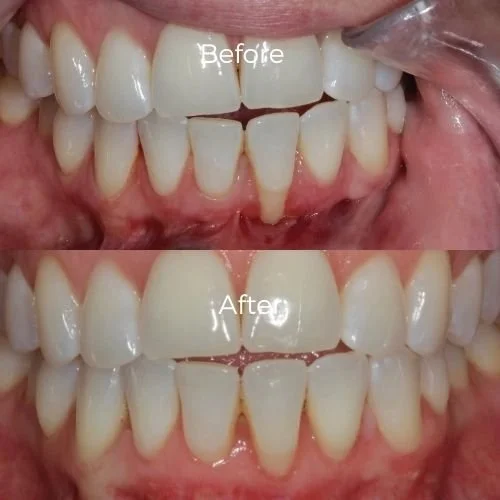
A gum graft rebuilds gum tissue that has receded, covering exposed roots and protecting teeth from sensitivity, decay and further loss. How much it hurts afterward depends mostly on two things: where the graft tissue comes from, and how the procedure is planned and performed.
There are three common sources of graft tissue:
| Graft type | Where the tissue comes from | What it means for pain |
|---|---|---|
| Free gingival graft | A thin layer of surface tissue from the roof of the mouth | Leaves an open wound on the palate; usually the most tender option |
| Connective tissue graft | Tissue from under a small flap on the palate, which is then closed | Palate heals faster and hurts less than a free gingival graft |
| Donor tissue graft (allograft or collagen matrix) | Processed, sterilized donor or collagen material | No second surgical site in the mouth, so no palate soreness |
Research published in the Journal of Periodontology found that patients who had free gingival grafts were significantly more likely to report palate pain in the first three days than those who had connective tissue grafts (Wessel & Tatakis, 2008). In other words, the graft site itself is rarely the main problem. The palate is.
That is why the most important conversation you can have with your periodontist happens before surgery, not after.
Who Is More Likely to Feel Pain After a Gum Graft?
Some patients are predictably more sensitive to pain after dental surgery, and we can often identify them before they sit in the chair. Known predictors include:
Anxiety about the procedure. This is the single strongest predictor of pain afterward.
Pain you already live with, such as jaw pain, headaches or chronic pain conditions.
Longer procedures, such as grafting several teeth at once.
Age. Younger adults often report more postoperative pain.
Natural red hair. People with red hair may respond differently to some anesthetics and can be more pain-sensitive.
None of these mean you will have a hard recovery. They mean your periodontist should plan for them, which is exactly what preventive pain control is designed to do.
How a Periodontist in NYC Prevents Pain After Gum Grafting: 6 Methods
The most effective approach is called preventive analgesia: stopping the pain cascade before, during and right after surgery, so your nervous system never becomes sensitized. It is far easier to keep pain from starting than to chase it once it has set in (Vadivelu et al., 2014).
1. Protect or Avoid the Palate
Because the palate causes most gum graft discomfort, this is where the biggest gains are made.
Skip the palate entirely when appropriate. Donor tissue (allograft) or collagen matrix grafts eliminate the second surgical site.
Choose a minimally invasive technique. The pinhole surgical technique and tunneling approaches avoid large incisions and reduce trauma.
Use a connective tissue graft instead of a free gingival graft when your own tissue is needed, since it leaves a closed, faster-healing palate.
Cover and protect the donor site. A custom clear palatal stent shields the area from food and your tongue. Platelet-rich fibrin (PRF), a healing membrane made from your own blood, has been shown in several randomized trials to reduce palate pain and speed healing (Meza-Mauricio et al., 2021). Tissue adhesives and low-level laser therapy have also been associated with less discomfort (de Almeida et al., 2024).
2. Anti-Inflammatory Steroid Before Surgery
For more extensive grafting, your periodontist may prescribe a single dose of a corticosteroid about an hour before the procedure. Steroids quiet the body's inflammatory response before surgery triggers it, which reduces both pain and the swelling patients find most distressing. Research in surgical patients shows lower pain scores and less need for pain medication, with no meaningful increase in complications (Mohammad et al., 2017).
3. Anti-Inflammatory Pain Relievers Taken Before the Procedure
Timing matters as much as the medication. Taking an anti-inflammatory such as ibuprofen before your appointment, rather than waiting until the numbness wears off, blocks pain-producing chemicals at the surgical site before they build up. After surgery, many patients do well with a scheduled combination of ibuprofen and acetaminophen, which provides relief comparable to opioids for dental pain, without the drowsiness, nausea or dependency risk. Always confirm with your periodontist that these medications are safe for you.
4. Treat Anxiety, Because Calm Patients Hurt Less
Anxiety is not just uncomfortable. It lowers your pain threshold through real changes in how your nervous system processes pain. Patients with high anxiety before surgery report significantly more pain afterward (Tadesse et al., 2022).
If you are nervous, say so. Options include a prescribed calming medication before your visit, nitrous oxide ("laughing gas") or IV sedation during the procedure, and simple measures such as music, clear explanations and a calm treatment room.
5. Shorter, Gentler Surgery
The procedure itself is one of the most powerful levers. Research suggests that shortening a surgery by as little as 10 minutes can reduce moderate-to-severe pain afterward by as much as 40%. In practice, that means:
the least invasive technique that will achieve the result
sharp instruments, which cause less tissue trauma
gentle handling of the gums to preserve their blood supply
an experienced periodontist who performs grafts routinely
This is one of the strongest reasons to choose an experienced, board-certified periodontist in NYC for gum grafting.
6. A Recovery Plan Decided Before Surgery
You should leave the office with your recovery plan already in hand, not improvised afterward. A good plan typically includes:
Scheduled anti-inflammatories, taken on a timetable rather than only when it starts to hurt
Ice on the outside of the face for the first 24 hours to limit swelling
A short steroid taper after more extensive procedures, when prescribed
Soft, cool foods and no chewing on the graft side
Optimizing vitamin D if you are deficient, since adequate levels have been associated with less pain after surgery (Miniksar et al., 2023)
For patients interested in integrative approaches, emerging research on regenerative peptides is promising, but human data are still preliminary. Any such therapy should be discussed with and supervised by your physician.
What Does Gum Graft Recovery Feel Like, Day by Day?
Everyone heals differently, but most patients follow a similar pattern:
| Time after surgery | What is typical |
|---|---|
| Day of surgery | Numbness for several hours; start your pain plan before it wears off |
| Days 1–3 | Peak soreness and swelling, especially at the palate; ice and scheduled medication matter most here |
| Days 4–7 | Discomfort fades noticeably; most patients are back to work within a day or two of surgery |
| Weeks 2–4 | Palate and graft continue to heal; gradual return to normal foods and brushing near the graft |
Call your periodontist if you have bleeding that does not stop with gentle pressure, pain that worsens after day three instead of improving, fever, or swelling that keeps increasing.
Frequently Asked Questions About Gum Graft Pain
-
No. The area is completely numbed with local anesthetic, and sedation is available for anxious patients. Most patients feel only pressure.
-
Most soreness peaks in the first two to three days and fades substantially within a week. Palate tenderness can linger a little longer, especially after a free gingival graft.
-
When tissue is taken from the palate, it creates a second healing wound that is exposed to food and your tongue. This donor site is usually the main source of discomfort.
-
Often, yes. Donor tissue (allograft), collagen matrix grafts and the pinhole surgical technique can avoid the palate entirely. Your periodontist will recommend the best option for your gums and goals.
-
Most patients do not. A preventive plan combining anti-inflammatories before and after surgery controls pain effectively for the large majority of gum graft patients.
-
In general, procedures that avoid the palate, such as donor tissue grafts and the pinhole surgical technique, cause the least discomfort. Free gingival grafts usually cause the most.
-
Most patients in New York City return to work within one to two days, with some tenderness for the rest of the week.
Gum grafts do not have to be a painful experience. Pain after surgery is not something you simply have to endure. It is a process that can be interrupted before it starts. Choosing the right graft type, protecting the palate, treating anxiety, using anti-inflammatories at the right time and leaving with a recovery plan in hand all add up to an easier recovery, usually without opioids.
If you have receding gums and have been putting off treatment because you are worried about pain, a consultation with a periodontist in NYC is the best place to start. At our Midtown Manhattan office, we will walk you through every option, including grafting techniques that avoid the palate.
