
Quick Summary
Peri-implantitis is a bacterial infection around a dental implant that destroys the gum and bone holding it in place. Caught early, many affected implants can be saved with thorough cleaning, correction of the crown, and, when needed, surgery that decontaminates the implant and regenerates bone. Implants that are loose or have lost most of their bone usually need to be removed.
If the gums around your dental implant are swollen or bleeding, you may be worried that the implant is failing. That concern deserves attention, but it does not automatically mean the implant has to be removed. The first step is to find out whether the problem is limited to inflamed gum tissue or whether the bone supporting the implant has started to break down.
At Dr. Scott Froum's Midtown Manhattan practice, patients seek help for implant problems ranging from early inflammation to advanced bone loss. Understanding the cause is the starting point for deciding whether an implant can be treated or needs replacement. Dr. Froum has also co-authored peer-reviewed research on regenerative treatment of peri-implantitis, including a series of 170 treated implants followed for up to 10 years, so the guidance on this page is grounded in published clinical results as well as daily practice.
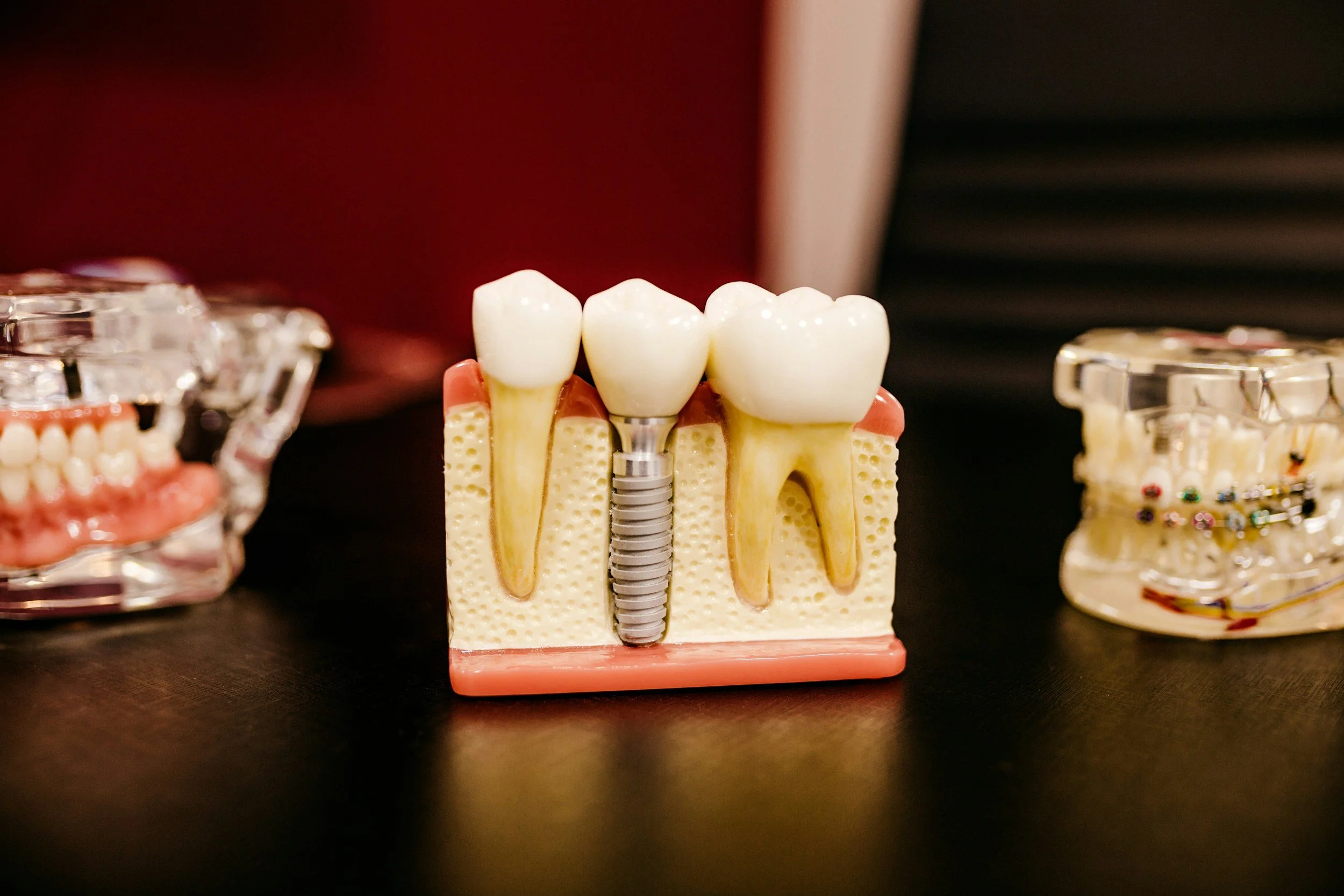
What Is Peri-Implantitis?
A dental implant is anchored in the jawbone, with gum tissue forming a protective seal around it. When bacterial plaque accumulates near the implant, that tissue can become inflamed. Early inflammation without detectable supporting bone loss is called peri-implant mucositis. When inflammation occurs together with progressive bone loss around the implant, it is called peri-implantitis.
Peri-Implant Mucositis vs. Peri-Implantitis
| Comparison | Peri-Implant Mucositis | Peri-Implantitis |
|---|---|---|
| Gums | Red, swollen, bleed on cleaning | Red, swollen, bleed; pus is common |
| Bone Around Implant | No loss beyond normal early remodeling | Progressive bone loss on X-ray |
| Reversible? | Usually, with prompt treatment | Can often be stopped; lost bone may be partly regenerated |
| Typical Treatment | Professional cleaning and better home care | Cleaning first; surgical or regenerative treatment is often needed |
| Urgency | Treat promptly so it does not progress | Evaluate promptly; bone loss is cumulative |
The distinction is important. Mucositis is generally more reversible when treated promptly. Peri-implantitis is more difficult to manage because lost bone changes how securely the implant is supported. The American Academy of Periodontology describes peri-implantitis as inflammation accompanied by deterioration of the bone around an implant.
A history of gum disease, inadequate plaque control, smoking, and diabetes can increase the risk of peri-implant problems. A crown that is difficult to clean or excess cement under the gums may also contribute to inflammation. Risk factors help guide care, but an examination is needed to establish the actual cause.
Implant health also reflects whole-body health. Poorly controlled blood sugar and chronic, low-grade metabolic inflammation intensify the body's inflammatory response to the bacteria around an implant, which can speed up tissue and bone breakdown and blunt healing after treatment. Because Dr. Froum also practices as a naturopathic doctor, an evaluation can look at these systemic contributors alongside the implant itself, in coordination with your physician. Controlling inflammation elsewhere in the body is part of controlling it around the implant.
Signs That Your Implant Needs a Closer Look
Peri-implantitis can develop without severe pain. Do not wait for the implant to hurt before asking for an evaluation. Warning signs include:
Repeated bleeding when brushing or cleaning around an implant.
Red, puffy, tender, or receding gums near the implant.
Pus, an unpleasant taste, or persistent bad breath around the area.
A change in the way the implant crown feels when biting, or visible implant threads.
A loose crown is not necessarily the same as a loose implant. The crown or connecting component may need repair while the implant remains stable. If the implant fixture itself moves, however, that is a more serious finding. Repeated bleeding, drainage, or swelling warrants prompt professional assessment. Rapidly spreading swelling, fever, or difficulty swallowing or breathing calls for urgent medical attention.
How a Periodontist Diagnoses Peri-Implantitis
A careful evaluation looks beyond the visible gumline. Your periodontist will review when the implant was placed, whether you have had periodontal disease, changes in your health, and any prior implant treatment. An examination can assess gum inflammation, bleeding, drainage, recession, the depth of the tissue pockets, and whether the implant or its restorative parts are mobile.
Dental X-rays help show the level of bone around the implant. When possible, comparing current images with earlier radiographs provides valuable context about whether support has changed. Additional imaging may be appropriate for complex cases. The crown's shape, cleanability, bite contacts, and any residual cement may also need to be examined.
These findings help distinguish peri-implantitis from other dental implant complications, including loose screws, damaged restorations, and problems that are primarily mechanical. Accurate diagnosis matters because treating surface inflammation will not correct an unstable component, and tightening a loose crown will not reverse bone loss.
Can a Failing Dental Implant Be Saved?
Often, yes, if the problem is caught before too much bone is lost and the treatment matches the type of defect. An implant with inflammation and limited bone loss may have more treatment options than one with extensive destruction or true fixture mobility. The key considerations include how much bone remains, the shape and location of the defect, the implant's position and surface, access for cleaning, the health of nearby tissue, and your ability to maintain the area afterward.
What the published research shows: In a case series co-authored by Dr. Froum, 170 implants with peri-implantitis in 100 patients were treated with the same regenerative surgical protocol and followed for 2 to 10 years. 98.8% of the implants survived, bleeding on probing was eliminated around 91% of them, and pocket depths decreased by an average of about 5 mm. Most implants needed only one surgical procedure. These are results from one specialist team using a specific protocol; they show what is possible, not what will happen for every implant.
An implant may still feel firm even when bone loss is present, so apparent stability alone is not proof of health. Conversely, a crown that feels loose may be repairable without removing the implant. An examination and imaging are needed before anyone can give you a realistic prognosis.
How Severe Is It? Early, Moderate, and Advanced Peri-Implantitis
Severity guides treatment. A widely cited system, the Froum and Rosen classification , combines bleeding or pus, pocket depth, and the share of the implant's length that has lost bone:
| Stage | Pocket Depth | Bone Loss | What It Usually Means |
|---|---|---|---|
| Early | 4 mm or more | Less than 25% of implant length | Best chance of saving the implant; nonsurgical care may be enough |
| Moderate | 6 mm or more | 25% to 50% | Surgical access or regeneration often needed |
| Advanced | 8 mm or more | More than 50% | Prognosis guarded; removal may be the better option |
Every stage also involves bleeding and/or pus when the tissue is probed. Your stage is determined by examination and X-rays, not by symptoms alone.
Treatment Options for Peri-Implantitis in NYC
Treatment is usually planned in stages. The European Federation of Periodontology's evidence-based guideline supports a structured approach based on the condition of the implant and surrounding tissues, rather than one treatment for every patient.
1. Control Plaque and Address Contributing Problems
Initial care focuses on reducing bacterial deposits and inflammation. This may include professional cleaning with implant-appropriate instruments, individualized home-care instruction, and correction of issues that make the area difficult to keep clean. If a crown traps plaque or excess cement is found, the restoration may need attention. Risk factors such as smoking and poorly controlled diabetes should also be addressed with the appropriate healthcare professionals.
The area is then reassessed. Nonsurgical treatment may be sufficient for mucositis, but peri-implantitis involving established bone loss often needs more than cleaning alone. Antibiotics or other adjunctive treatments are not automatic solutions and should be considered only when clinically appropriate.
2. Consider Surgical Access or Regenerative Treatment
If inflammation persists or the bone defect is significant, surgical treatment may allow better access to the implant surface and the affected tissues. Depending on the anatomy, treatment can involve cleaning and decontamination of the exposed implant surface, reshaping tissue or bone to improve access, or selected regenerative procedures.
In the protocol studied in Dr. Froum's published research, regenerative treatment combined four steps: decontaminating the implant surface, applying a biologic growth factor (enamel matrix derivative or platelet-derived growth factor), filling the defect with bone graft material, and covering it with a protective membrane or a connective tissue graft.
In suitable cases, bone grafting services and other regenerative methods may be considered to address certain defects around the implant. Whether regeneration is realistic depends on the defect's shape, the implant surface, infection control, and several patient-specific factors. A graft should not be presented as a predictable fix for every type of implant bone loss.
Is Laser Treatment an Option?
Lasers are a useful tool, but not a stand-alone cure. Particles of titanium and residual cement have been found in the gum tissue around many failing implants, which suggests that cleaning the implant surface alone may not be enough. In two published cases co-authored by Dr. Froum, an Nd:YAG or CO2 laser used to decontaminate the soft tissue after regenerative surgery turned previously failed treatments into successes, with measurable bone fill on X-rays. This is early evidence from case reports, not large trials, so laser use is decided case by case as part of a complete treatment plan.
3. Reassess Healing and Long-Term Stability
After treatment, follow-up visits are used to check bleeding, pocket changes, tissue health, and whether bone loss has stabilized. Healing takes time, and the result must be monitored rather than judged by how the gum looks immediately afterward. Some implants can be maintained after treatment; others continue to lose support despite appropriate care.
What Affects Whether Treatment Works?
A review of 100 treated patients in Dr. Froum's published research identified factors linked to better results:
Maintenance every three months or less: Patients seen at least every three months after surgery gained significantly more bone than those seen less often.
Screw-retained crowns: Implants with screw-retained restorations gained significantly more bone than those with cemented crowns, where excess cement can irritate the tissue.
Blood sugar control: Patients without diabetes showed a trend toward better soft tissue results.
Smoking, plaque control, and the shape of the bone defect also matter. Some of these factors are in your control, which is why aftercare is planned before surgery, not after.
When Is Implant Removal the Better Option?
If the implant fixture is mobile, fractured, poorly positioned, or has lost too much bone support, attempts to save it may not offer a dependable long-term result. Removal can sometimes protect the surrounding bone and tissues and create an opportunity to plan a healthier replacement.
That does not always mean another implant can be placed immediately. The site may need time to heal, treatment of residual infection, or grafting before replacement is considered. A second opinion is reasonable when the decision is complex, especially if you have been told an implant must be removed but do not understand why.
How Much Does Peri-Implantitis Treatment Cost in NYC?
Cost depends on the stage of disease and the treatment needed. In our office, nonsurgical treatment typically ranges from $315 to $1200, and surgical or regenerative treatment from $650 to $2850 per implant. The main cost drivers are the number of implants involved, whether bone grafting and growth factors are used, whether the crown must be removed or replaced, and the imaging required. Dental insurance coverage for implant-related treatment varies widely; our team can review your benefits and give you a written estimate after your evaluation. Treating an implant early is almost always less expensive than removing and replacing it.
Protecting Your Implant After Treatment
Long-term follow-up is part of the treatment, not an optional extra. Implants need daily cleaning and professional monitoring even when they feel comfortable. Your care team can show you how to clean around your specific crown or bridge using a soft toothbrush and suitable interdental aids without damaging the tissue.
Follow the maintenance interval recommended for your risk level. Patients with previous gum disease, a history of peri-implantitis, or restorations that are harder to clean may need more frequent assessments. The practice's periodontal maintenance services can help monitor gum health and identify changes that would otherwise be easy to miss.
Get a Dental Implant Evaluation in Midtown Manhattan
If you live or work in Midtown East, Turtle Bay, Sutton Place, Roosevelt Island, or elsewhere in New York City, you do not have to guess what is happening around a troubled implant. Dr. Scott Froum is a board-certified periodontist whose Midtown Manhattan practice evaluates implant complications and provides second opinions, and who has co-authored peer-reviewed research on saving implants affected by peri-implantitis.
Our office is located at 1110 Second Avenue, Suite 305, New York, NY 10022. Call 212-751-8530 or request an implant evaluation to discuss the next step. Bring prior implant X-rays or treatment records if you have them. We will focus on establishing the cause of the problem and explaining which options are reasonable for your situation.

About Dr. Scott Froum
Scott H. Froum, DDS, is a board-certified periodontist and implant specialist in private practice in Midtown Manhattan. He is Editorial Director of Perio-Implant Advisory, a volunteer professor at SUNY Stony Brook, and a co-author of peer-reviewed studies on the regenerative treatment of peri-implantitis published in The International Journal of Periodontics & Restorative Dentistry. He is also a naturopathic doctor and holds a diplomate in anti-aging medicine, which shapes his focus on the connection between oral and whole-body inflammation.
Frequently Asked Questions About Peri-Implantitis
-
No. Some affected implants can be treated and maintained, especially when the problem is identified before severe support is lost. The outlook depends on bone levels, implant stability, tissue conditions, and your response to treatment. A periodontist can explain whether the prognosis is favorable, guarded, or poor. In a published series of 170 treated implants co-authored by Dr. Froum, 98.8% were still in place 2 to 10 years after regenerative treatment.
-
Nonsurgical care is usually an important first step and can be effective for inflammation that has not caused bone loss. When peri-implantitis includes significant bone destruction, surgery may be needed to access the affected area. The choice depends on clinical findings and response to initial care.
-
Neither is a substitute for diagnosing the source of the problem and professionally treating the area. In selected cases, medications may be part of an individualized plan, but they cannot repair a loose implant or predictably replace lost supporting bone. Avoid self-treating recurring symptoms instead of scheduling an evaluation.
-
Not as a replacement. Lasers can help decontaminate the implant and surrounding tissue, and published cases suggest they may improve results when added to regenerative surgery. When significant bone has been lost, the defect usually still needs to be accessed and treated surgically.
-
Nonsurgical treatment is usually completed in one or two visits, followed by a reassessment several weeks later. If surgery is needed, initial soft tissue healing takes a few weeks, while bone regeneration is evaluated on X-rays over roughly 6 to 12 months. Maintenance visits continue long term.
-
It depends on your plan. Some plans cover part of the cleaning or surgical treatment around implants; many limit or exclude implant-related procedures. We can check your benefits and provide a written estimate before treatment.
-
Often, yes, but rarely on the same day. After an infected implant is removed, the site usually needs time to heal and may need bone grafting before a new implant can be placed predictably.
-
Yes. It can recur, especially if plaque control, maintenance visits, smoking, or blood sugar control lapse. Regular maintenance, ideally every three months after treatment, is the most important factor in keeping a treated implant healthy.
