Types of Gum Grafts: Before and After
Are you interested to know what your smile may look like, whether sensitivity will improve, how recovery feels, and whether the result will look natural? Those are the right questions to ask a periodontist. Before-and-after photos can be helpful, but they only tell part of the story. What matters even more is understanding what your gums look like before treatment, what changes during healing, and what a realistic after result should be.
Since you may be researching gum grafting in NYC or trying to decide where to get a gum graft in Manhattan, the most useful information is often practical rather than technical. We are assuming that you want to know if your case looks treatable, how long your gums will look tender or uneven, and what a successful result should actually mean. This article will answer those questions and help you better understand what type of gum grafting service you may need.
What "Before" Usually Looks Like
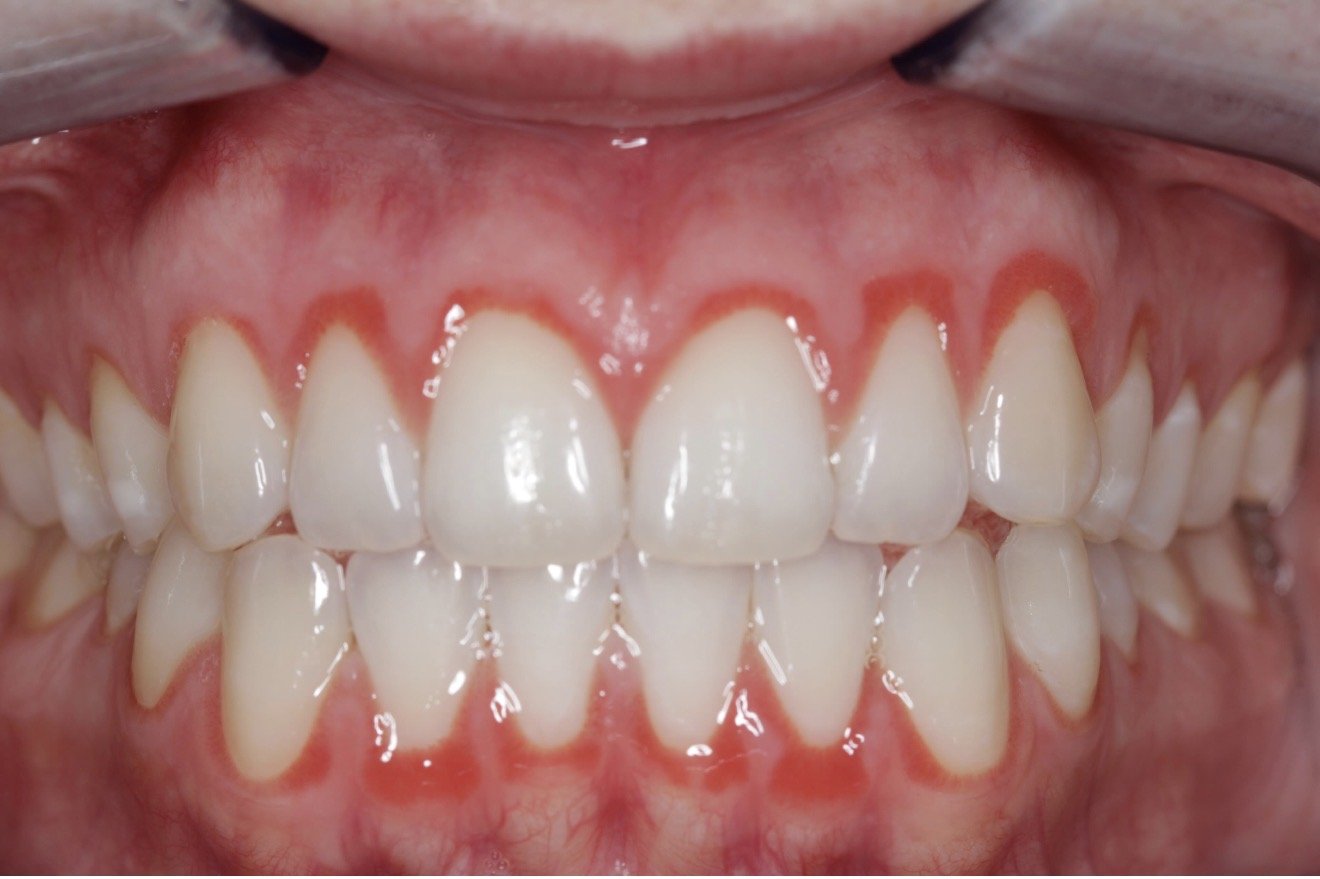
Before gum grafting, people often notice one or more of the same patterns. A tooth may look longer than it used to. The gumline may appear uneven. One tooth may look more exposed than the one next to it. Cold drinks may trigger a quick sharp sensitivity near the root. In some cases, the gums simply feel thin or fragile when brushing. These are common signs of recession, and they matter because exposed roots are more vulnerable to discomfort, root decay, and continued tissue loss.
If you are unsure why recession started in the first place, the answer is not always obvious from a photo alone. Brushing habits, naturally thin tissue, inflammation, orthodontic movement, and bite-related stress can all play a role. The practice already has a useful article on what causes gum recession, and that context matters because the cause of recession influences what the after result needs to achieve and how stable it is likely to be over time.
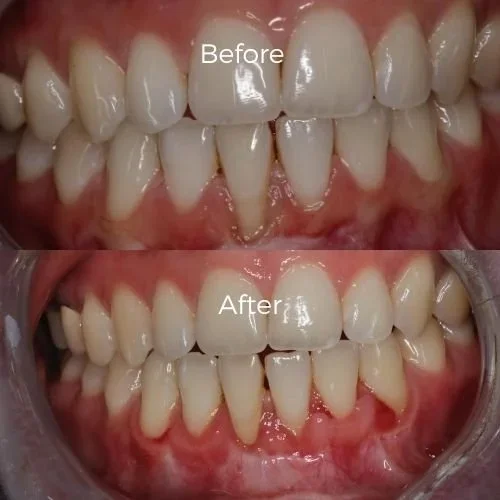
Our Gum Grafting Services page includes multiple before-and-after examples. Those photos are valuable, but the real takeaway is not simply that the gumline can look fuller later. It is that a better after result should mean healthier coverage, less sensitivity, better protection for the root, and a more balanced frame around the teeth.
What You Should Know Before Treatment
The first thing you will need to know before treatment is that not every recession case should be treated the same way. Two people can both have long-looking teeth, but one may be best suited for a traditional connective tissue graft while another may be better served with donor tissue, platelet-rich fibrin, or a minimally invasive approach. On Dr. Froum’s service page, the practice explains that regenerative and minimally invasive techniques are used whenever possible, with traditional grafting reserved for select cases.
That distinction is important when someone is looking for the best periodontist for gum grafting. The best fit is not simply the person who offers a graft. It is the specialist who can explain what level of root coverage is realistic, how the tissue is expected to heal, whether the gums are thick enough to support a stable result, and whether a more conservative option may be appropriate.
A consultation is also the point where the question changes from “Can this be treated?” to “What should success look like in this case?” Most people who want a natural-looking smile usually care about color match, contour, symmetry, and comfort. People who have sensitivity or repeated irritation often care more about protection and long-term stability. Often, they care about both.
If you are still comparing whether you are likely candidate, the related article on who is a good candidate for gum grafting is a helpful internal reference, especially for cases involving thin tissue, aesthetic concerns, or orthodontic planning.
Common Before-and-After Case Types
Single-Tooth Recession in the Smile Zone
A very common before-and-after case is one front tooth or canine that suddenly looks longer than the others. In these cases, the patient is often as concerned about appearance as health. The after goal is not only to cover the root but also to make the gumline look more symmetrical with the neighboring teeth. Even a small amount of recession near the front of the mouth can stand out in photos, conversation, and everyday smiling.
Multiple Lower Front Teeth With Thin Gums
Another classic case involves recession across several lower front teeth. Patients often describe this as “my bottom teeth are getting longer” or “the gums look worn away.” These cases may be related to thin tissue, long-term brushing habits, prior orthodontic movement, or mechanical stress. In these situations, the after result is often judged less by one dramatic cosmetic change and more by whether the whole area looks stronger, more stable, and less vulnerable.
Orthodontic Patients With Pre-Existing Recession
Orthodontic patients are another important group to mention in a before-and-after article because the starting point can look deceptively mild. On the practice’s candidate page, Dr. Froum notes that patients beginning orthodontics with thin gum tissue or existing recession may be at higher risk for worsening recession as teeth move. For these patients, the “before” may not look severe, but the decision to strengthen the tissue early can make the long-term after result more predictable.
Cases Where a Minimally Invasive Option May Be Possible
Not every recession case requires a palate harvest. Dr. Froum’s Chao Pinhole® Technique page describes a minimally invasive method that repositions gum tissue through a small opening, without cutting or stitching, in selected cases. His site also notes that platelet-rich fibrin may support healing and soft-tissue regeneration in appropriate situations.
That is also where one of Dr. Froum’s outside medical articles becomes relevant. In a February 2025 Perio-Implant Advisory article on the Pinhole Surgical Technique with platelet-rich fibrin, he and Dr. John Chao discuss how this approach may support soft-tissue healing and esthetic outcomes in selected recession cases. That is useful context for patients who want to know whether every “before” automatically leads to the same kind of “after.”
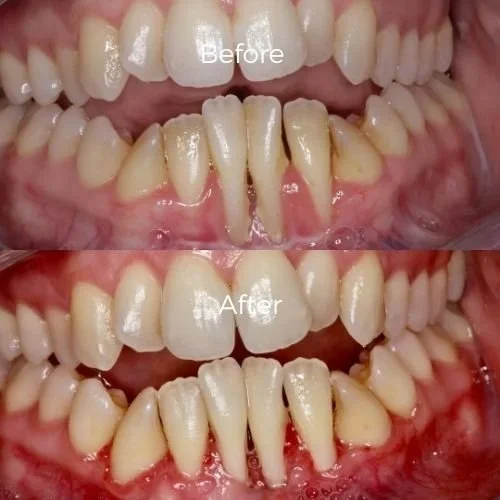
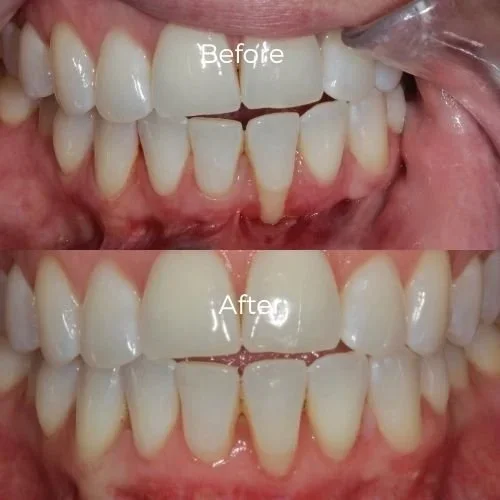
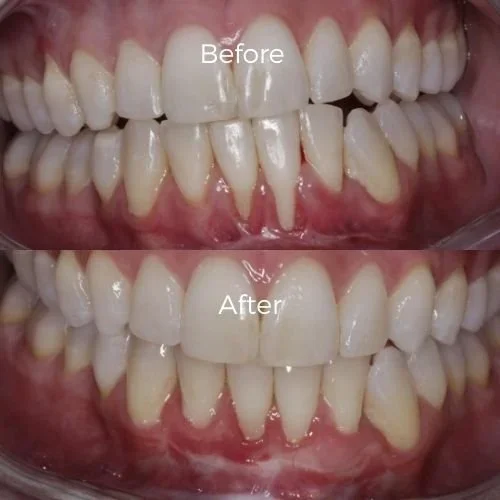
What the Immediate "After" Really Looks Like
This is the part that before-and-after galleries usually do not show. Right after treatment, the gums do not look like the polished final result. They often look fuller, redder, or more delicate than what you may expect expect. If a donor site was used, the palate may also feel sore. Mild pain, bleeding, swelling, and seeping are normal after soft-tissue graft surgery, according to Dr. Froum’s periodontal aftercare instructions.
Those same aftercare instructions also tell you not to pull on the lip to inspect the area, not to probe it with the tongue or fingers, and to avoid forcefully rinsing, spitting, or drinking through a straw early on. This is one of the most important expectation-setting points in a true before-and-after article. The immediate after phase is about protection and healing, not about judging the final cosmetic result.
What a Good "After" Result Should Mean
A successful after result is not just a prettier photo. It should mean the root is better protected, the tissue is more stable, and that you are more comfortable eating, brushing, and smiling. The American Academy of Periodontology explains that gum graft surgery covers exposed roots, helps prevent additional recession and bone loss, may reduce tooth sensitivity, and can improve the aesthetics of the smile.
You should also hear an honest version of success. Not every case ends with complete root coverage that looks identical to untouched tissue. Some cases are primarily about strengthening a thin zone of tissue. Some are about reducing sensitivity and protecting the tooth from future breakdown. Some are highly visible cosmetic cases where contour and symmetry matter just as much as coverage. The best before-and-after conversations are the ones that define success for that specific mouth, not for a generic photo online.
What Before-and-After Photos Do Not Show
Photos rarely show whether inflammation was under control before treatment, whether the recession was caused by brushing trauma, whether the tooth position creates added stress on the gums, or whether the you had to improve home care first. They also do not show whether the result is likely to stay stable without follow-up care. That is why image comparison alone can be misleading.
This is also where Dr. Froum’s treatment philosophy matters. He emphasizes conservative planning, advanced soft-tissue care, and minimally invasive options whenever appropriate. If you are comparing providers in Manhattan, that is often more meaningful than a dramatic isolated photo because it speaks to how the case is evaluated, not just how it looks once it is finished.
How to Protect the Result Long Term
Once the graft has healed, the after phase is really about maintenance. Dr. Froum’s Periodontal Maintenance Services page states that these visits are typically recommended every three to four months, depending on your specific needs. That is an important point to include in this blog because the best-looking result is only meaningful if it stays healthy.
Long-term stability also depends on brushing technique, inflammation control, and addressing the original cause of recession. If the problem started with overly aggressive brushing, thin tissue, orthodontic stress, or bite-related trauma, those factors still need attention after the gums heal. The goal of treatment is not only to improve the before picture. It is to avoid sliding back toward it.
Why This Topic Matters & Final Thought
Dr. Scott H. Froum is a board-certified periodontist in Midtown Manhattan, and the practice’s office is located at 1110 2nd Ave Ste 305, New York, NY 10022. If you are comparing treatment options locally and want a specialist’s opinion on whether a traditional graft, donor tissue approach, or minimally invasive option makes the most sense, the next step is to schedule a consultation.
The most helpful way to look at gum grafting before and after is not as a simple cosmetic transformation. It is a timeline. Before treatment, the tissues may be thin, uneven, sensitive, or vulnerable. Right after treatment, the area may look fuller and less refined because it is healing. Weeks later, the contour begins to settle. Months later, the result should feel stronger, look healthier, and give you more confidence in both comfort and appearance.